Parking at healthcare facilities is more than just a convenience; it significantly impacts a patient’s overall experience. First impressions matter, and the arrival experience is often the first point of contact a patient has with a facility. That initial step into the parking lot can influence their level of stress, comfort, and preparedness for their appointment. But what type of parking do patients prefer? Valet parking or self-parking? Let’s break down the factors that make each option stand out.
What Is Valet Parking vs. Self‑Parking?
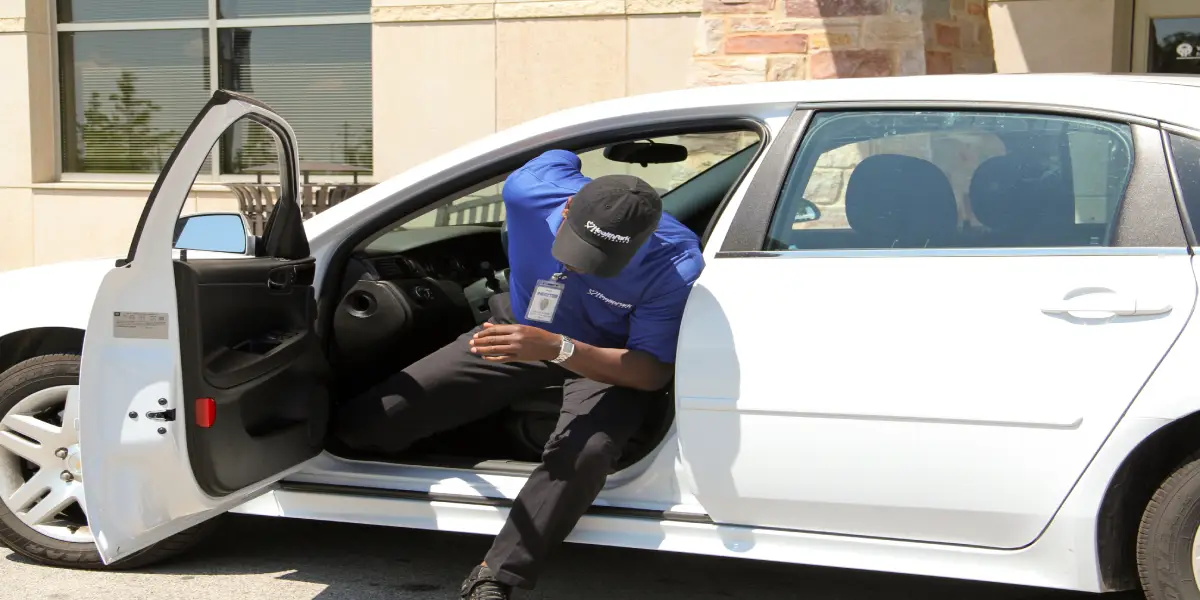
- Valet Parking: A professional attendant parks and retrieves the vehicle for patients. Patients simply hand over their keys and proceed to the entrance.
- Self-Parking: Patients drive into parking lots and park their own vehicle. Afterward, they walk to the healthcare facility’s entrance.
First Touchpoint: Patient Expectations
Parking is the first interaction a patient has with a healthcare facility. The experience sets the tone for their visit. Whether they’re dealing with an injury, illness, or just a routine check-up, the act of finding a parking spot can feel like a stressful task, especially during peak hours. Long wait times for parking or a remote parking lot can increase frustration. This is where valet parking steps in as a stress-free solution.
Patients with mobility issues, elderly individuals, or those in pain will find valet services especially valuable. It provides a direct drop-off at the entrance, making it easier for patients to focus on their health rather than the logistics of parking.
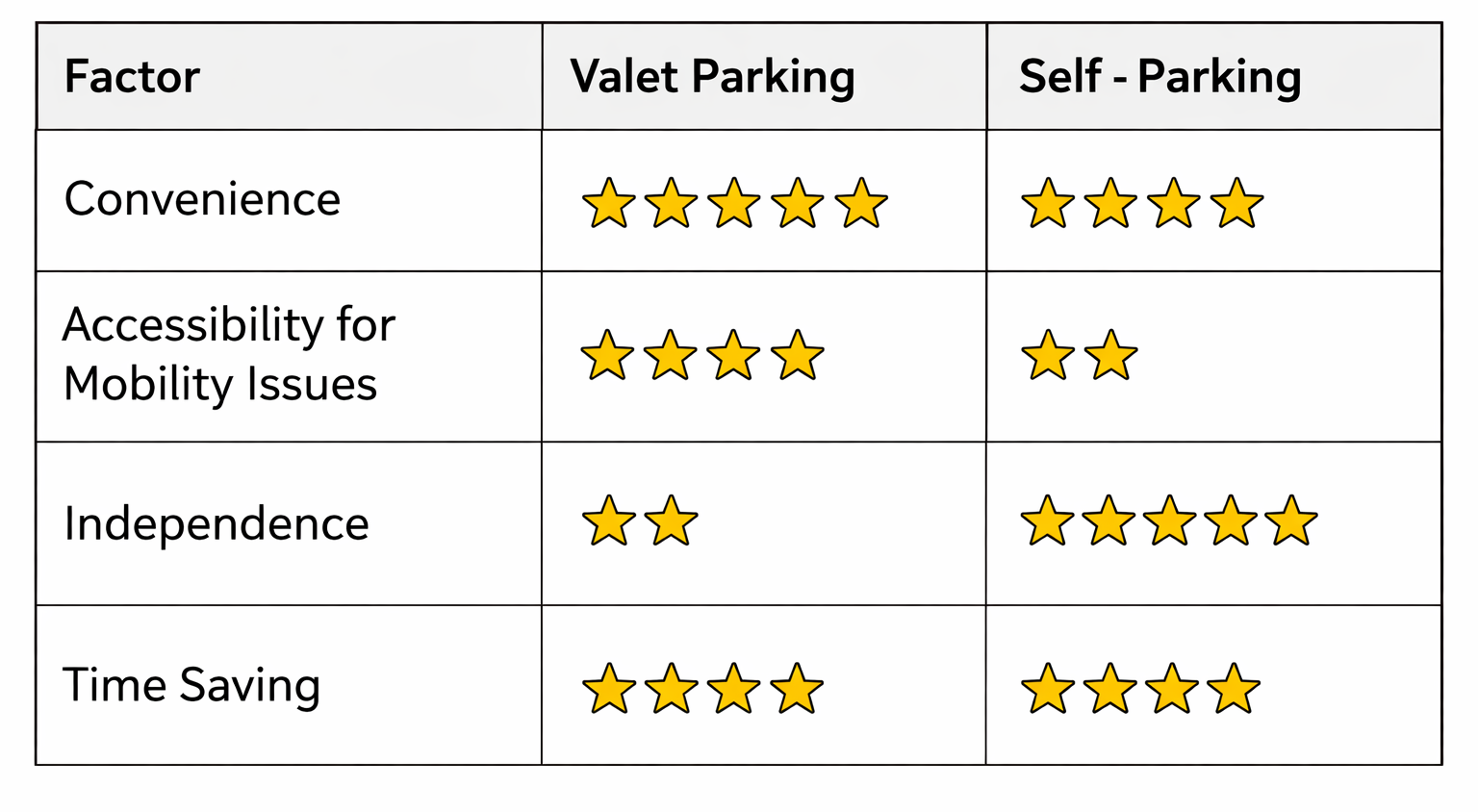
Convenience & Accessibility Why Patients Prefer Valet
- Eliminates the hassle of finding a parking spot.
- Especially helpful for elderly patients or those with mobility concerns.
- Direct drop-off at the entrance no long walks.
- Time-saving and hassle-free during peak hours.
- Adds to a positive first impression, setting the tone for excellent patient care.
Self‑Parking Benefits When It Works Best
While valet parking offers a high level of convenience, self-parking is a solid choice for certain situations. For patients who are younger, ambulatory, or simply in a hurry, self-parking can be an ideal option.
- Provides full control of the vehicle.
- No wait times for vehicle retrieval.
- Ideal for patients looking for independence and simplicity.
Side‑by‑Side Comparison
Here’s a quick comparison between valet and self-parking based on common patient priorities:
Real Patient Preferences
Many patients choose valet parking because it reduces physical strain and offers stress-free transitions. A patient who is already feeling anxious about their appointment can breathe easier knowing that parking won’t be an additional burden. They also appreciate the time savings and the ability to arrive directly at the entrance without walking long distances.
At some healthcare facilities, shuttle services may also be available for patients who self-park in distant lots. While this provides another option, valet parking often remains the more desirable choice for those with time constraints or physical limitations.
How Valet Enhances the Entire Care Experience
Valet parking is more than just about convenience; it’s about enhancing the entire patient care experience. When patients don’t have to deal with parking lots, traffic flow, or long walks to the entrance, they arrive feeling more relaxed and ready to focus on their appointment. The valet service ensures smoother operations at the facility, contributing to an improved patient experience.
Additionally, valet services help with parking management during busy times, which can reduce missed appointments. By providing a streamlined and efficient parking solution, healthcare facilities can improve scheduling and ensure that patients receive timely care.
Why Offering Both Options Can Be Powerful
Studies show that patients appreciate the choice of parking solutions. Offering valet parking caters to a wide range of needs, ultimately improving the overall parking solutions at the facility.
Conclusion
When it comes to parking at healthcare facilities, comfort, efficiency, and accessibility often outweigh cost concerns. Patients seek convenience and a stress-free arrival experience, and valet parking delivers exactly that. By offering valet services, healthcare facilities can set a positive tone for the entire visit, ensuring that patients feel cared for from the moment they arrive.
Valet parking plays a vital role in enhancing the patient experience and improving overall facility operations. Whether for elderly patients with mobility concerns or those in a hurry, valet services provide a smooth and time-saving solution that contributes to better patient outcomes.
FAQ
Q1: Why do patients prefer valet parking at healthcare facilities?
Valet parking offers convenience, comfort, and time savings, especially for those with mobility issues or health concerns. It allows patients to skip the hassle of searching for a parking spot and head straight to the entrance.
Q2: How does valet parking improve the patient experience?
Valet services set a positive tone for the visit, reducing stress and allowing patients to focus on their appointment rather than parking logistics. It also helps with traffic flow and improves overall parking management at the facility.
Q3: Can patients still use self-parking if valet parking is available?
Absolutely! Many healthcare facilities offer both valet and self-parking options to cater to different patient preferences. This ensures flexibility and meets the diverse needs of patients.
Q4: What happens if I self-park and need help getting to the entrance?
Some facilities offer shuttle services to transport patients from remote parking lots to the entrance. However, valet parking is often the most direct and convenient option for those needing immediate assistance.