You’re running late for a crucial appointment, the rain is pouring, and the garage is full. The frustration of circling for a spot triggers a cortisol spike before you even enter the building. For patients already carrying health anxieties, that friction sets the wrong tone entirely.
A well-run hospital valet parking program changes that from the very first moment. Most people view it as a luxury. Healthcare experts recognize it as a critical accessibility tool, one where healing begins at the curb. When patients step directly to the front doors instead of navigating a packed lot, valet service stops being a perk and starts being a necessity.
The “Hospital Ambassador” Role
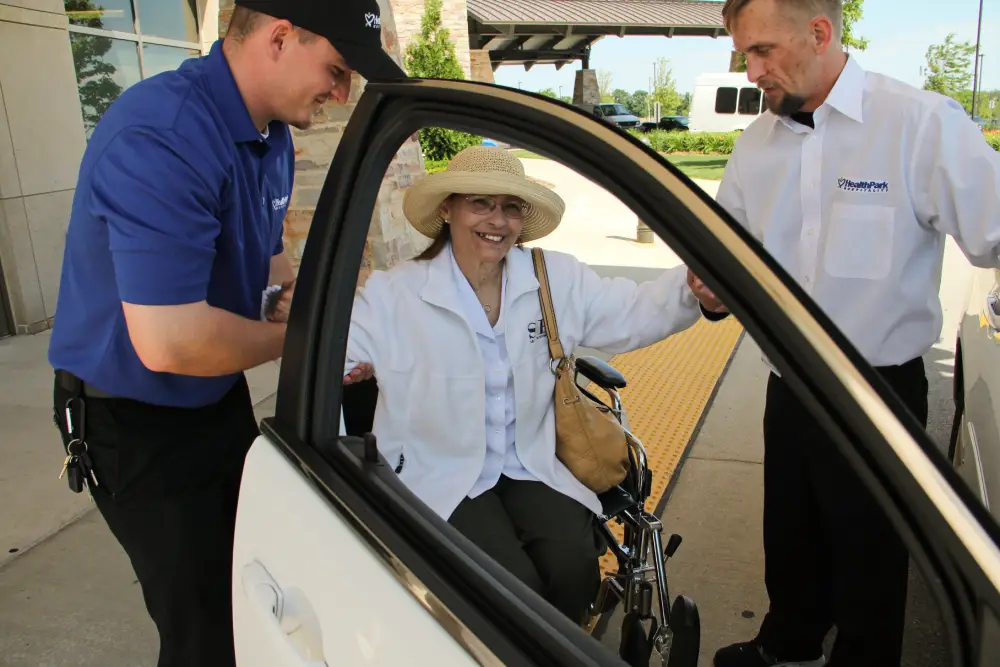
While handing over your keys at a hotel is a luxury, at a medical center, it is a moment of genuine relief. This shift in perspective transforms valet attendants into Hospital Ambassadors. They are no longer simply moving vehicles; they are actively managing patient anxiety before a single step is taken through the sliding glass doors.
Because these environments are uniquely sensitive, hospital valet training looks vastly different from standard commercial parking operations. A true curbside professional must master four specialized pillars:
1- HIPAA Compliance: Simply recognizing which clinic a patient is visiting requires strict medical privacy awareness.
2- Mobility Assistance: Safely helping individuals with walkers or wheelchairs transition from the car to the curb.
3- Compassionate Communication: Reading non-verbal cues from overwhelmed or grieving families and responding with empathy, not just efficiency.
4- Wayfinding: Providing clear, immediate directions to specific departments so patients don’t arrive flustered after parking.
5- HealthPark University Training: Through HealthPark University, valet ambassadors receive specialized training that goes beyond parking vehicles. This includes patient experience education, safety protocols, service recovery techniques, and awareness of the healthcare environment. The program prepares teams to manage high-volume arrival periods, respond professionally to sensitive situations, and serve as an extension of the hospital’s front-door experience, ensuring every interaction reflects the standards of a healthcare setting.
At HealthPark Valet, staff training is treated as a core part of service quality not an afterthought. Every attendant is trained to represent the facility with the same standard of care patients expect once they are inside.
Managing High-Volume Traffic Flow
Through training, we work with facilities to implement clear directional pathways and arrival workflows to keep traffic moving smoothly, reduce congestion at the front entrance, and improve the overall patient experience
The solution lies in dividing the curb into distinct staging and retrieval zones. Arriving vehicles drop off in one area. Departing visitors retrieve from another. Inbound and outbound traffic never cross paths.
Operations managers analyze peak appointment density to set precise staffing ratios, scaling the team up for heavy clinic mornings and pulling back when it’s quiet. Getting this choreography right matters beyond convenience. Well-run programs can reduce emergency room drop-off congestion by up to 40 percent.
The Role of Integrated Technology
Leaving the hospital after a long procedure is exhausting. Extra waits at the curb feel agonizing when your energy is already gone. Modern parking technology acts as an invisible caretaker here. By utilizing ticketless valet systems, hospitals eliminate the frantic search for paper tags entirely. Patients simply text from their recovery room, and the car is waiting at the curb when they arrive, conserving vital energy for those who need it most.
Three digital features define a high-quality operation:
1- Ticketless Systems: Phone numbers replace easily lost paper slips.
2- SMS Retrieval: Families request their vehicle before they even leave the lobby.
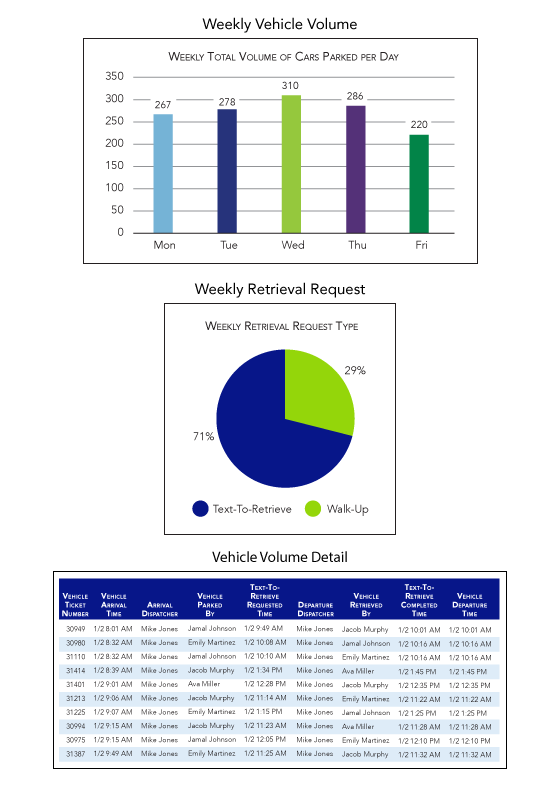
3- Real-Time Tracking: Daily wait-time data allows managers to refine future staffing schedules continuously.
Secure digital key lockers round out the system, strictly monitoring vehicle access and reducing hospital liability in the process. Combined, these tools transform what could be a frustrating final step into a seamless close to an already difficult day.
Safety, Liability, and ADA Compliance
The same standards of care that govern clinical wings apply the moment your tires touch the driveway.
ADA accessibility requirements dictate how drop-off zones must be designed, ensuring every patient can navigate the transition from car to entrance without obstacles. For a patient with a walker or wheelchair, having a designated, flat transition area is not a courtesy it is a matter of fundamental safety.
Handing over your keys during a stressful medical event also requires an invisible safety net. Once an attendant takes the vehicle, the hospital’s valet liability insurance activates to protect that asset completely. If the vehicle is scratched or damaged while in the attendant’s care, the valet provider’s liability insurance covers it, not the patient’s personal auto policy.
Protecting each vehicszle involves rigorous damage documentation at arrival and strict key security protocols before the car ever moves. When families see that level of care and accountability, their overall anxiety drops. It sets the stage for how these curbside impressions directly influence official hospital rating scores.
How Valet Service Affects HCAHPS Scores
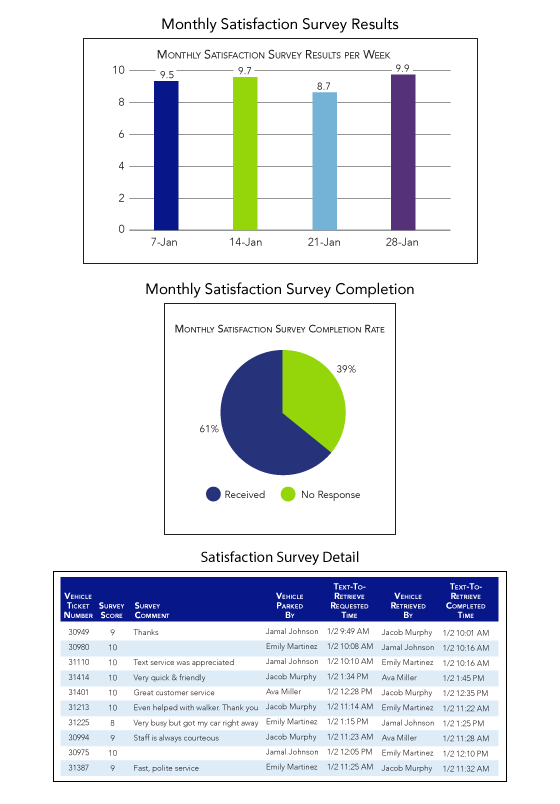
Post-discharge, patients evaluate their experience through HCAHPS surveys. While clinical care is the primary focus, satisfaction scores are deeply influenced by that very first curbside interaction.
Tracking metrics like retrieval times, greeting quality, and wait times gives administrators a direct lever for improving scores that affect funding and accreditation. A seamless, friendly drop-off positively influences two key survey areas in particular: willingness to recommend the facility, and overall perception of the hospital environment. The ripple effect of a well-run valet program extends far deeper into the patient experience than most administrators initially expect.
Outsource or Self-Manage?
Every hospital faces the same operational choice: run the driveway internally or hire outside specialists. Outsourcing shifts the entire burden of recruiting, training, scheduling, and managing valet staff to a dedicated vendor. One that brings healthcare-specific expertise, built-in staffing pools, and liability coverage from day one. When a hospital valet service is outsourced, the vendor also assumes financial responsibility for incidents involving vehicles under their care, removing a complex risk from the facility entirely.
Health Park Valet designs programs around each facility’s specific layout, patient volume, and operational goals. Whether it is a small outpatient clinic or a large regional hospital, the approach is tailored to the facility’s needs. Not a one-size-fits-all solution applied from the outside.
The Bottom Line
The true value of hospital valet parking is not found in logistics. It is found in peace of mind. A program working at its best is one that patients barely notice. They arrive calmer, appointments run on time, and the facility’s reputation reflects a standard of care that starts at the curb and carries all the way through.
That is what a great hospital valet parking program actually does.
If you are ready to improve the patient experience from the moment they arrive, Health Park Valet is ready to help. Contact us today to discuss a program built around your facility’s specific needs.
Frequently Asked Questions
What is a hospital valet parking program?
A professional service where trained attendants handle vehicle drop-off and retrieval for patients, visitors, and staff. This creates a smooth, stress-free experience from the moment someone arrives at the facility.
How does valet parking improve patient satisfaction?
It removes a common source of frustration before patients even enter the building. A smooth arrival sets a positive tone that carries through the entire visit, including how patients respond to formal surveys like HCAHPS.
Is my vehicle safe with a hospital valet service?
Yes, with a reputable provider. Professional programs use ticketless tracking, secure key storage, and comprehensive liability coverage to ensure full accountability for every vehicle.
How do I know if my hospital needs a valet program?
If patients regularly arrive late due to parking, if lots are at capacity during peak hours, or if satisfaction surveys flag the parking experience negatively. Emergency room drop-off congestion is another clear indicator.
What should I look for in a valet parking partner?
Healthcare-specific experience, documented training protocols, flexible program design, transparent pricing, and a proven track record with similar facilities. General valet experience is not enough; the stakes in a medical environment are different.