Healthcare facilities today operate in an increasingly experience-driven environment. While clinical excellence remains the foundation of quality care, patients and visitors now evaluate hospitals based on every interaction from scheduling and signage to parking and arrival. One area that has gained significant attention in recent years is hospital valet parking services.
Once considered a luxury or convenience, valet parking is now recognized as a strategic component of patient-centered care. Hospitals across the country are adopting valet programs to reduce stress, improve accessibility, and create positive first impressions that support overall satisfaction. This article explores why hospital valet parking services are becoming essential and how they benefit both patients and healthcare organizations.
Why Parking Is a Critical Part of the Patient Experience
For many patients, parking is the very first interaction they have with a healthcare facility. Unfortunately, it is also one of the most common sources of frustration. Large campuses, limited spaces, confusing signage, and long walking distances can quickly elevate stress levels, especially for patients arriving for procedures, appointments, or emergencies.
Studies consistently show that first impressions shape how patients perceive the quality of care they receive. When parking is difficult or overwhelming, patients may already feel anxious or rushed before they even enter the building. Conversely, a smooth, welcoming arrival can immediately put patients at ease.
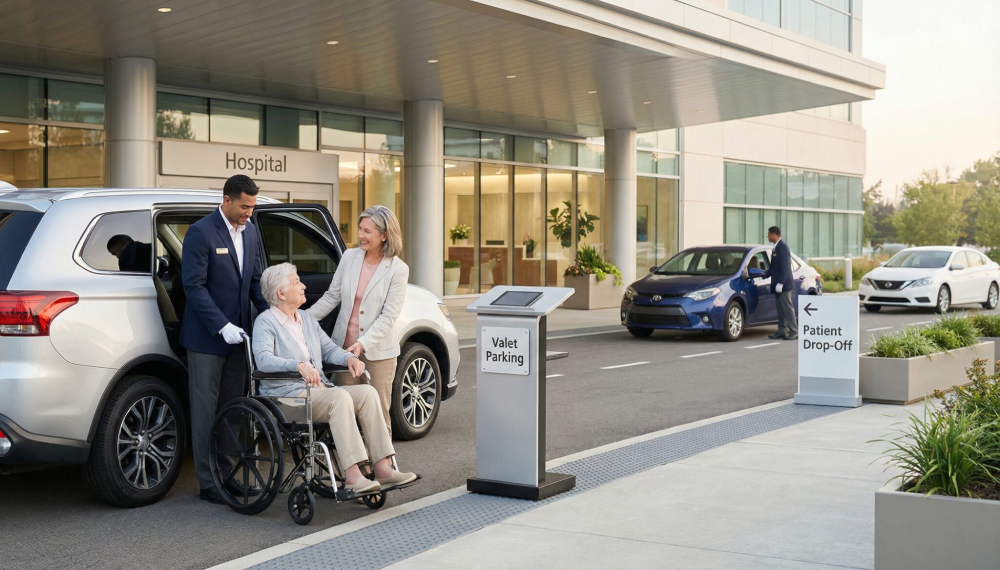
Hospital valet parking addresses this challenge by removing uncertainty and simplifying the arrival process. Patients are greeted curbside, assisted immediately, and guided into the facility without delay. This shift transforms parking from a pain point into a positive experience.
The Shift Toward Patient-Centered Care
Patient-centered care emphasizes respect, comfort, accessibility, and responsiveness to individual needs. While often associated with clinical practices, patient-centered care extends far beyond the exam room.
Non-clinical services such as valet parking, wayfinding, and front-desk interactions play a major role in how patients experience a facility. Hospitals that prioritize these touchpoints demonstrate a holistic commitment to care.
Valet parking aligns seamlessly with patient-centered principles by:
- Reducing physical strain for patients with mobility challenges
- Minimizing stress for elderly patients and caregivers
- Offering compassionate, human interaction at the point of arrival
As healthcare organizations compete not only on outcomes but also on experience, valet parking has become a meaningful differentiator.
Improving Accessibility for All Patients
Accessibility is a critical consideration for hospitals serving diverse populations. Many patients arrive with limited mobility, chronic pain, temporary injuries, or assistive devices such as walkers and wheelchairs. Navigating a large parking structure or outdoor lot can be physically demanding and, in some cases, unsafe.
Hospital valet parking improves accessibility by:
- Allowing patients to exit vehicles directly at the entrance
- Reducing long walking distances
- Supporting ADA compliance and accessibility goals
- Providing hands-on assistance when needed
By prioritizing ease of access, valet services help ensure that all patients regardless of physical ability can enter the facility with dignity and confidence.
Operational Benefits for Healthcare Facilities
Beyond patient experience, hospital valet parking services deliver meaningful operational advantages. Managing parking internally can be resource-intensive, requiring recruitment, training, scheduling, supervision, and risk management. Outsourcing valet services to a professional partner allows hospitals to focus on core clinical operations.
Key operational benefits include:
Improved Traffic Flow
Professional valet teams are trained to manage curbside congestion efficiently, preventing bottlenecks during peak hours and maintaining safe, orderly traffic patterns.
Consistent Staffing and Training
Dedicated valet providers supply trained personnel who understand healthcare environments, patient sensitivity, and safety protocols.
Reduced Administrative Burden
Hospitals avoid the costs and complexities associated with staffing, payroll, insurance, and compliance management.
Scalable Solutions
Valet services can scale up or down based on patient volume, seasonal demand, or special events without disrupting operations.
Why More Hospitals Are Making Valet a Standard Service
Patient expectations continue to evolve. Many patients now compare healthcare experiences to hospitality environments, where convenience and service are standard. Hospitals that fail to meet these expectations risk lower satisfaction scores and weaker patient loyalty.
Valet parking is increasingly viewed as:
- A standard component of high-quality healthcare environments
- A competitive advantage in crowded healthcare markets
- A visible commitment to patient comfort and respect
As hospitals place greater emphasis on experience metrics, valet parking has shifted from optional amenity to strategic necessity.
Choosing the Right Hospital Valet Partner
Not all valet services are created equal especially in healthcare settings. Selecting the right partner is critical to ensuring safety, professionalism, and consistency.
Healthcare leaders should look for valet providers that offer:
- Healthcare-specific training and protocols
- Emphasis on patient interaction and empathy
- Strong safety, compliance, and insurance standards
- Proven experience in hospital and medical environments
A well-chosen valet partner becomes an extension of the hospital’s brand and values.
Conclusion: Valet Parking as a Strategic Investment
Hospital valet parking services are no longer about convenience alone. They are a strategic investment in patient experience, accessibility, and operational efficiency. By addressing one of the most stressful aspects of a hospital visit parking healthcare facilities can create calmer, more welcoming environments that support better outcomes and stronger patient relationships.
As patient-centered care continues to shape the future of healthcare, valet parking stands out as a simple yet powerful way to enhance the entire care journey.